I'm sorry you bought a second passport
Note: This article was originally published in the Watchman’s Torch Newsletter, issue 33, as a guest article. Since it’s a paid newsletter, I’ve chosen to delay my own publishing so that readers of said publicatoin have preferential treatment.
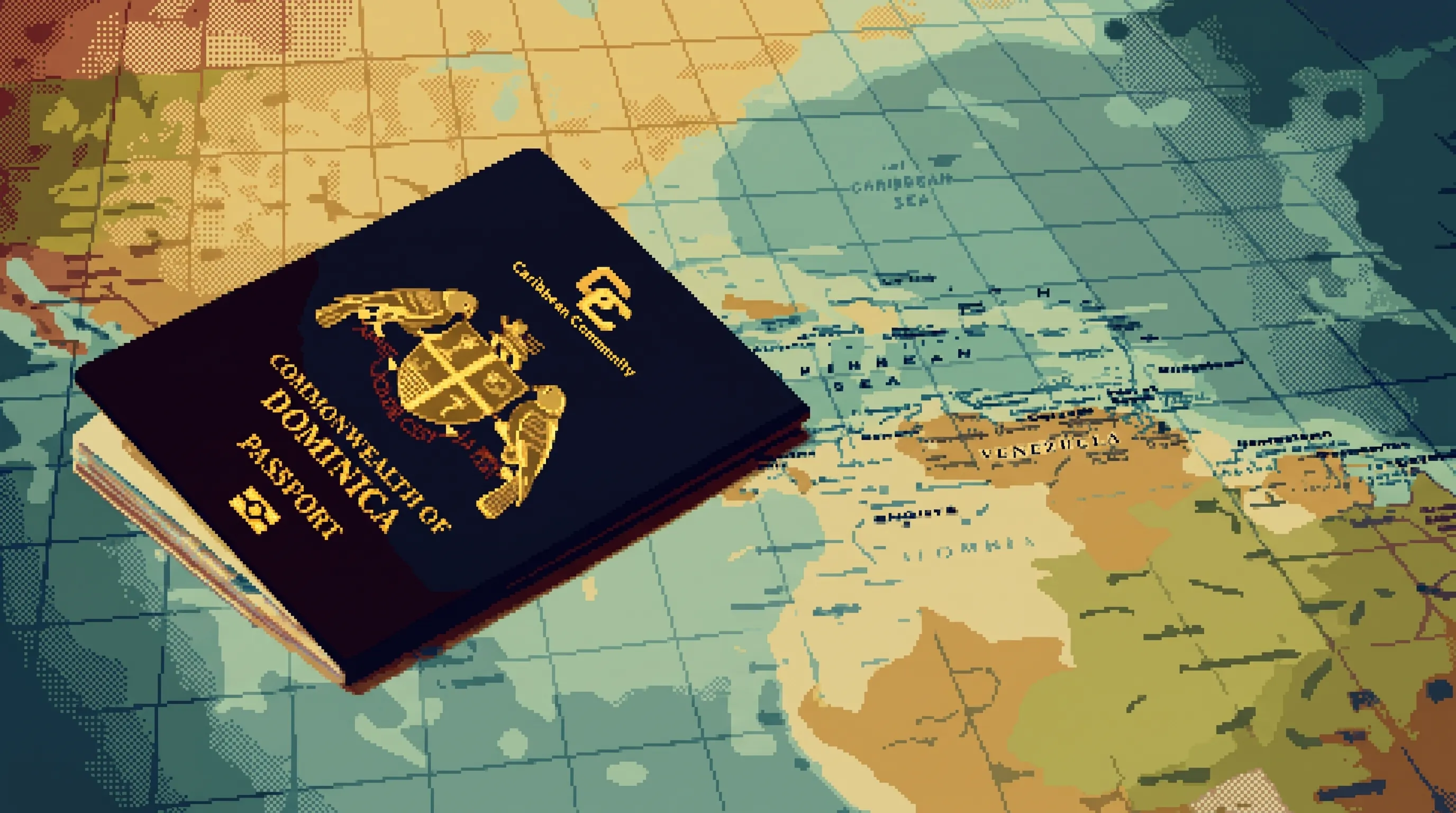
A couple of months ago, Ursula von der Leyen, head serpent of the European Commission, sent a very polite letter to the five Caribbean nations that offer Citizenship-by-Investment (CBI) programs, in which she presented a simple ultimatum: end the programs by 2028 or forget about entering the European Union without a visa.
For those not in the know, CBI programs are a way for wealthy people from any corner of the world to become a citizen of the offering country, typically within weeks to months and for a small-ish fee of $200,000 upwards. Those five island nations were, until recently, the forerunners of this worldwide nation-auction. If you were an international business tycoon or a mega-rich cryptobro, the deal was pretty tempting: spend a bit of money doing a CBI, wait a few weeks, and pick up your new second passport in the mail! You’d have visa-free access to over 150 nations, including the coveted EUSSR. You could even renounce your country of origin and base yourself on one of the islands, drinking margaritas by the beach and paying zero dollars in taxes, forever.
However, this latest development brought about by Miss Von der Leyen has exposed a certain kind of structural fragility in how these programs are popularly conceived; a fragility that could become very costly to ignore in the future…
Let’s start weighing the pros and cons of buying a second passport. In my humble opinion, there are only two kinds of people who might benefit from such programs: those whose country of birth is a straight-up shithole (think India, Ukraine, Egypt, and the like) and U.S. Americans. If you fall into the first category, you basically cannot go anywhere nice without an often-impossible-to-get visa and, most likely, a very thorough rectal inspection by a border agent. Your problems don’t end there, though (oh no, no, no). If you manage to escape your home gulag and plant your roots elsewhere, you will quickly be informed that your country of origin will not allow you to hold any other citizenship; they own you, and they don’t like to share. Your choices are either to remain a third-worlder forever or to renounce your shit nationality entirely—that is, if you can (sorry Moroccans).
But what about Muricans born in the land of the free? The United States is almost the only country in the world (sorry Eritreans) that taxes its citizens whether they live in Arizona or Antarctica. For a wealthy American, no place is safe from the all-reaching claws of the IRS. The savvy reader may have already realized that if taxation is based on citizenship, then not being a citizen anymore equals no tax anymore. Setting aside the humongous exit tax someone already contemplating renunciation would have to pay,1 spending 250K and getting another citizenship ASAP does not sound that bad. It prevents you from becoming stateless; you get access to parts of the world that didn’t like your government “building democracy” with bombs in the Middle East; you cease to be perceived as an imperialist gringo; and you can enjoy new opportunities you didn’t have before as an American, like easy international banking.
Those benefits are mostly real, but are they worth the quarter-million-dollar price tag? In the case of the Caribbean nations, my answer is very clear: absolutely not. For starters, a passport is not an investment asset. It’s just a well-laminated piece of paper claiming you as a subject of a nation other nations recognize. That’s it. You do not own your passport. If you don’t believe me, open yours right now and read what’s inside. You cannot own it; it’s just borrowed property from the state. The only people who refer to passports as “assets,” “investments,” or “insurance” are, guess what, people who sell passports. Oh, and the best part about it is that these second passports can be easily revoked. Think you have the same rights as native islanders because you became a citizen of the island? Think again. Out of the roughly 16 countries that currently offer CBI programs, only three give you complete legal assurance that your new citizenship cannot be taken away. None of the Caribbean nations are among the three, and they can easily cancel your shiny second passport if they don’t like you or your activities. As the saying goes, what one hand gives, the other hand takes. They won’t give you your money back either; it’s a “donation,” after all.
Another point: as recently witnessed with comrade von der Leyen’s letter, no one can guarantee visa-free access to other countries. Visa-waiver programs are a consequence of two phenomena: good diplomacy and geopolitical relevance. For small and insignificant coconut islands, today’s 150+ visa-free destinations could easily shrink to 90 in two years’ time. These nations, with their deeply offended black presidents, lack the weight to negotiate with major players like the EU about whether their minions can enter the Old Continent visa-free. Thucydides put it very well 24 centuries ago: “The strong do what they can and the weak yield what they must!” The bigger a nation is, the more strategic zones it controls, the more resources it has… the more leverage its diplomats have in negotiations. A lack of these geopolitical factors will render the islands unable to do anything but submit to the serpentine Ursula.
Yet another point: in the same way that a $5-a-month VPN won’t go to jail for you, your new Caribbean home country won’t risk a military invasion, a CIA-orchestrated regime change, or (much less) sanctions for you. If the glowies want you back for whatever reason, these nations will sell you out faster than MelaniaCoin. Read about Roger Ver. The man renounced his U.S. citizenship after becoming a national of Saint Kitts and Nevis through its CBI program. He followed the law and was sure his ties with the land of the free were more than severed. Being a citizen of the small island nation served him nothing (I repeat, nothing) in his extradition to the United States. No Caribbean diplomat wearing a boater hat went to Washington to negotiate the release of a poor Kittitian citizen. No public outcry echoed through Nevis. On the contrary, the St. Kitts government actually set out to expand its legal extradition framework, signaling to the big boys its commitment to be even more compliant from then on. Talk about political insurance…
A final point worth making is that any immigration procedure is extremely privacy-invasive. Biometrics, family records, financial statements, and other sensitive data points are all legally required in order to partake in such processes. All that sensitive information is going to be stored in a database somewhere, and that database will eventually (trust me) get breached. To quote privacy legend Michael Bazzell: “Secondary citizenships often carry risks. Some countries require mandatory military enlistment for all citizens. Some apply inflated taxes on secondary citizens. A few are always at risk of financial ruin, and any investments could be lost. I try to discourage clients from these methods unless absolutely necessary.”2 Yeah, not so appealing anymore.
After the royal decree from Tsar Ursula made the news, CBI salesmen have predictably coped really hard, throwing a temper tantrum and pointing a finger at their customers, telling them they shouldn’t want to go to the EU in the first place! Seriously, I’m not even making this up. The whole CBI industry has been putting the islands on a pedestal for years; now they panic when the cracks become obvious. This whole situation just shows that good strategic international planning cannot be substituted by sexy marketing promises. You cannot evade your home country by simply holding a piece of paper. You cannot live in Coconut Island and expect that to be enough to escape extradition. You cannot magically turn into James Bond. You cannot just buy diplomatic immunity. This lack of understanding of geopolitical fundamentals is what leads people to make costly decisions they later regret.
To be clear, I think purchasing a second citizenship still might make sense in some specific circumstances. Turkey, Vanuatu, or El Salvador are noteworthy options, each with its own quirks. For the vast majority of people interested in a second passport, however, ancestry, naturalization, and birth tourism are much more sensible routes. Sure, they will require a bigger time commitment, but the offering countries tend to have better global standing than CBI nations (precisely because half of their GDP does not come from CBI). Even so, you will still be covenanting your future to a new master; so don’t get upset when political winds change and you get affected. After all, in the end, you always get what you paid for.
Footnotes & References
the biggest demographic renouncing U.S. citizenship is multi-millionaires; regular Joes who want to leave don’t have to pay the
extortionexit fee if they’re not worth more than $2 million. But, then again, renouncing doesn’t make sense for regular Joes. Why would you? You are not even rich! ↩︎Bazzell, Michael (2022). Extreme Privacy: What it takes to disappear (Fourth Edition), p. 424. ↩︎